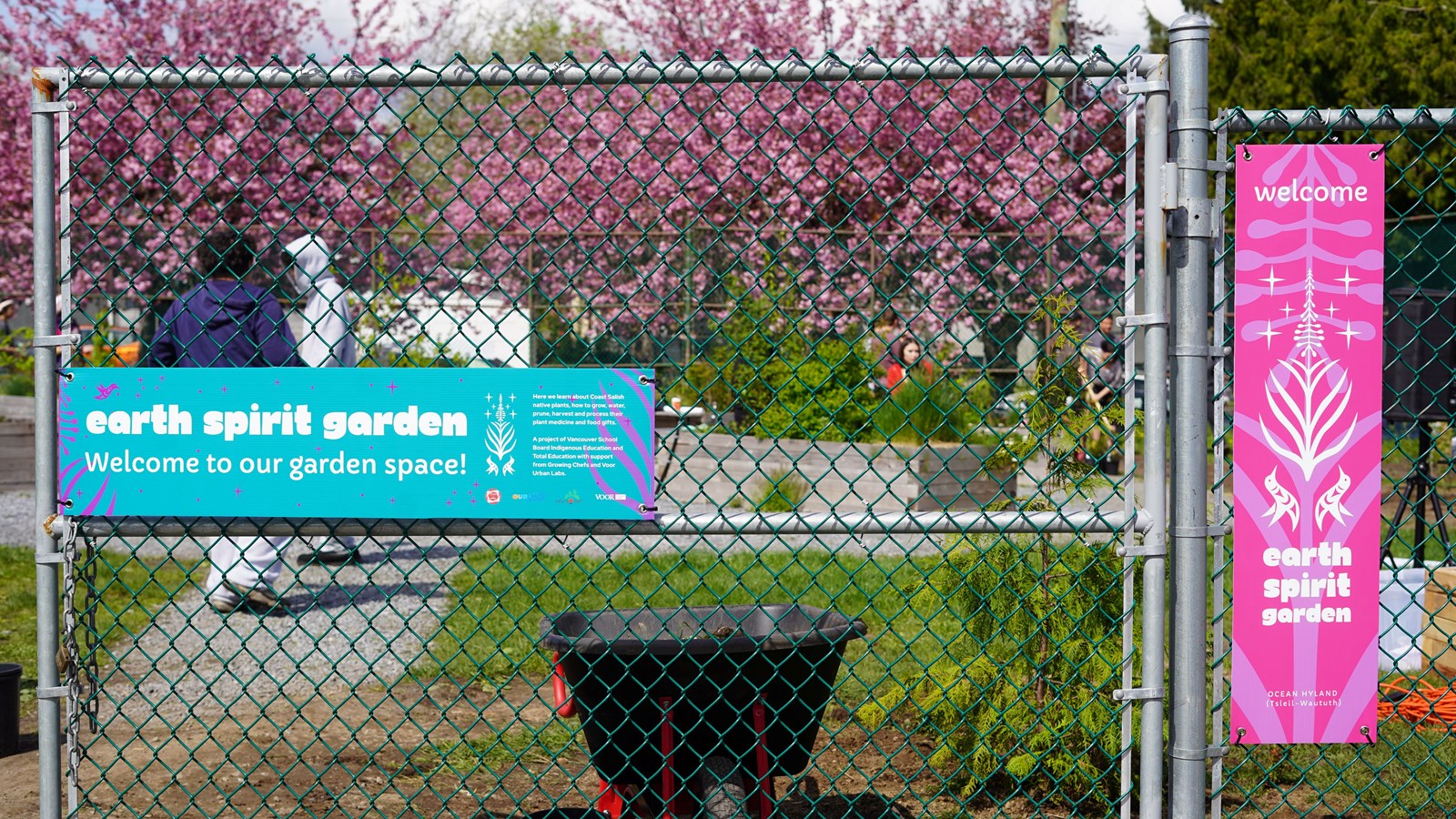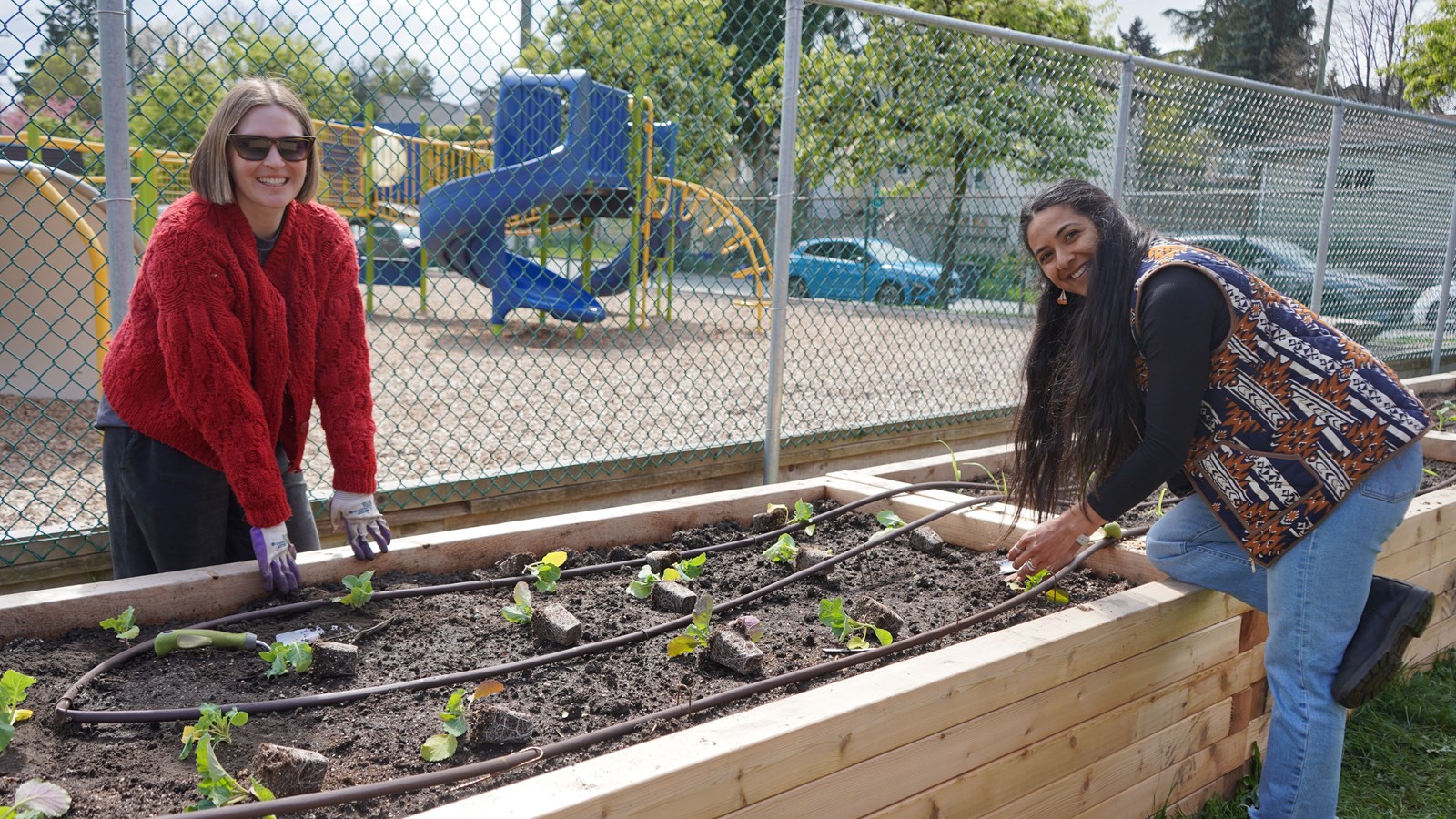



Earth Spirit Healing Garden provides an urban respite at Total Ed
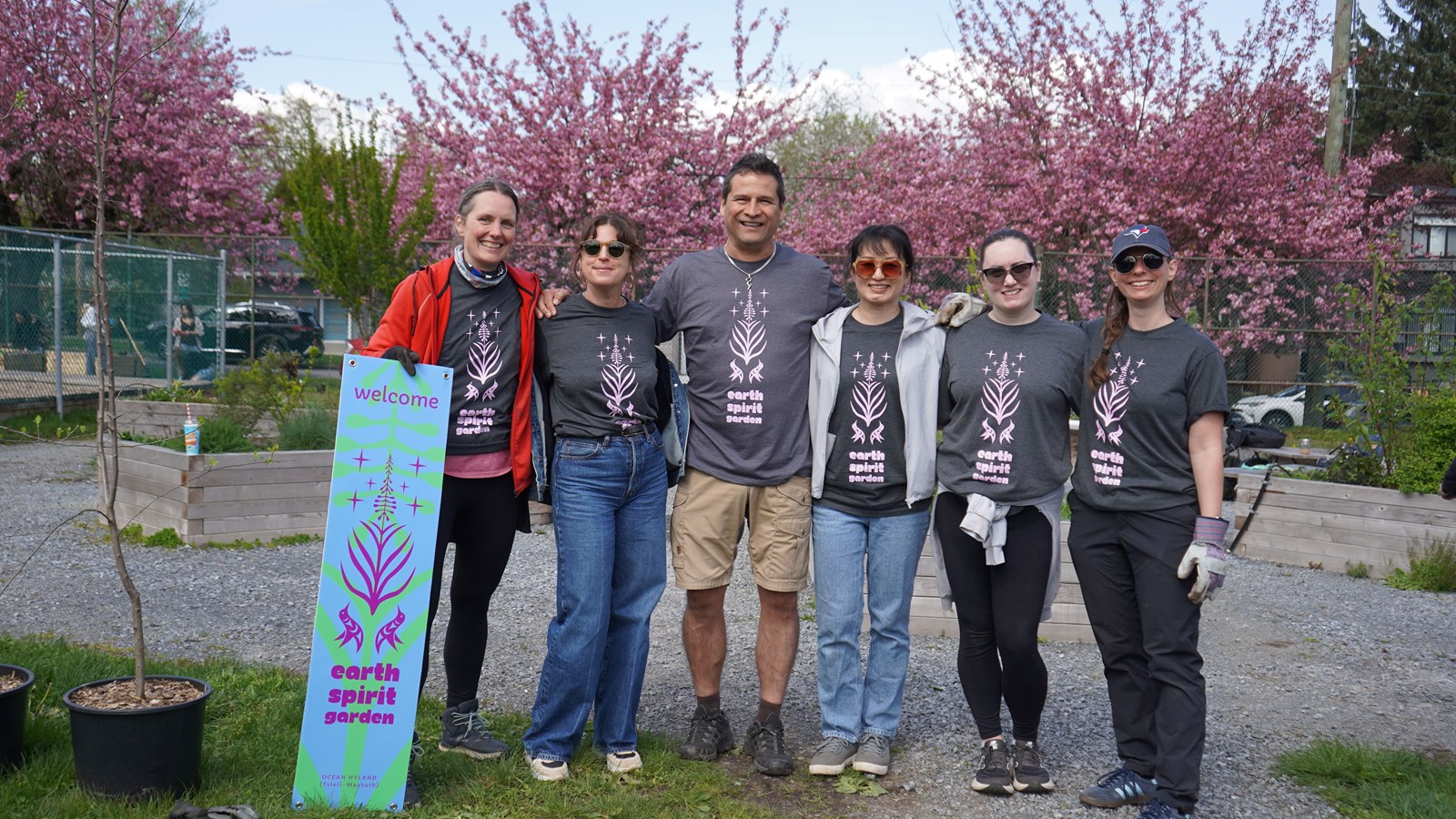
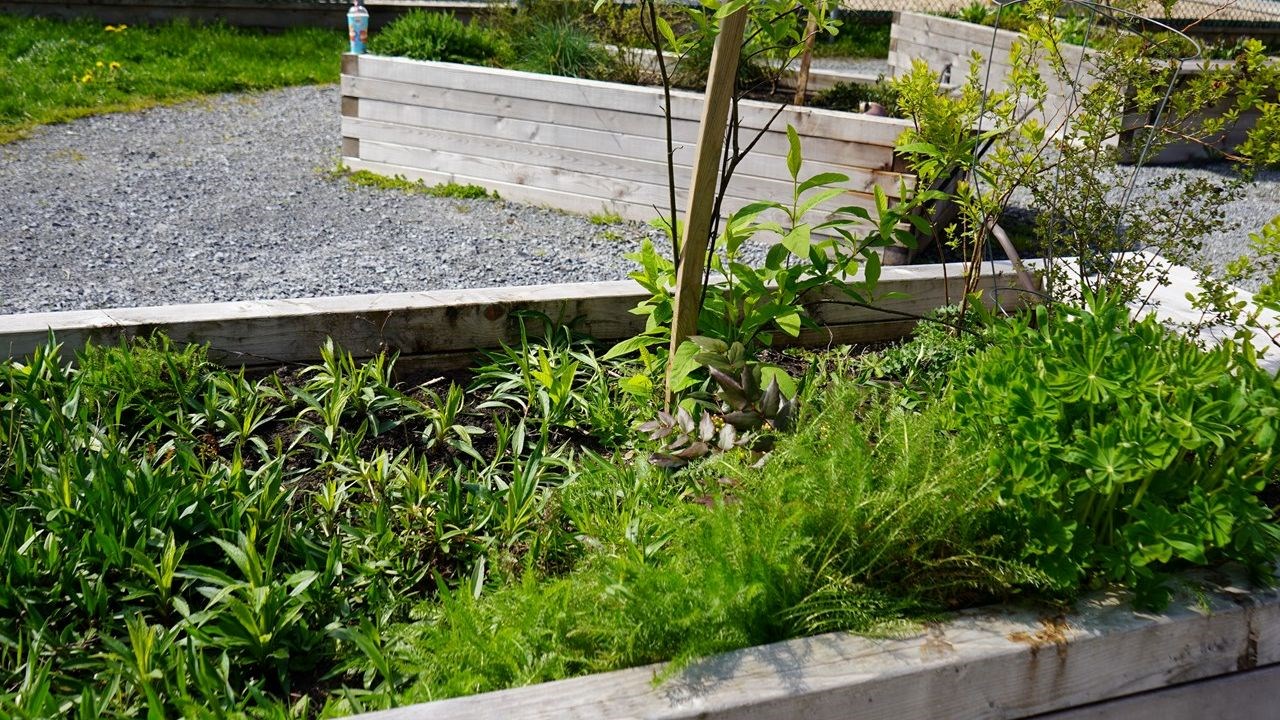
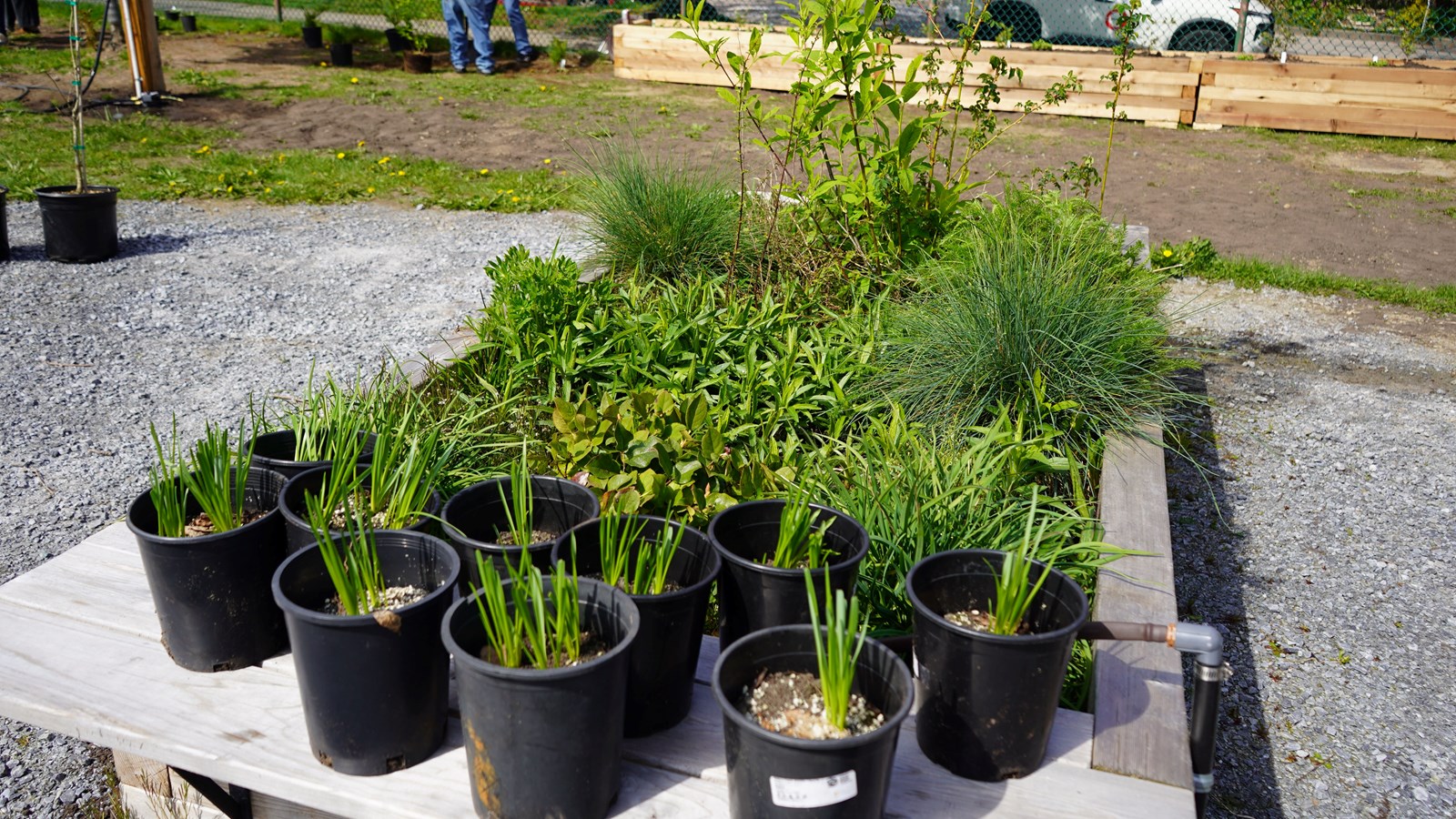
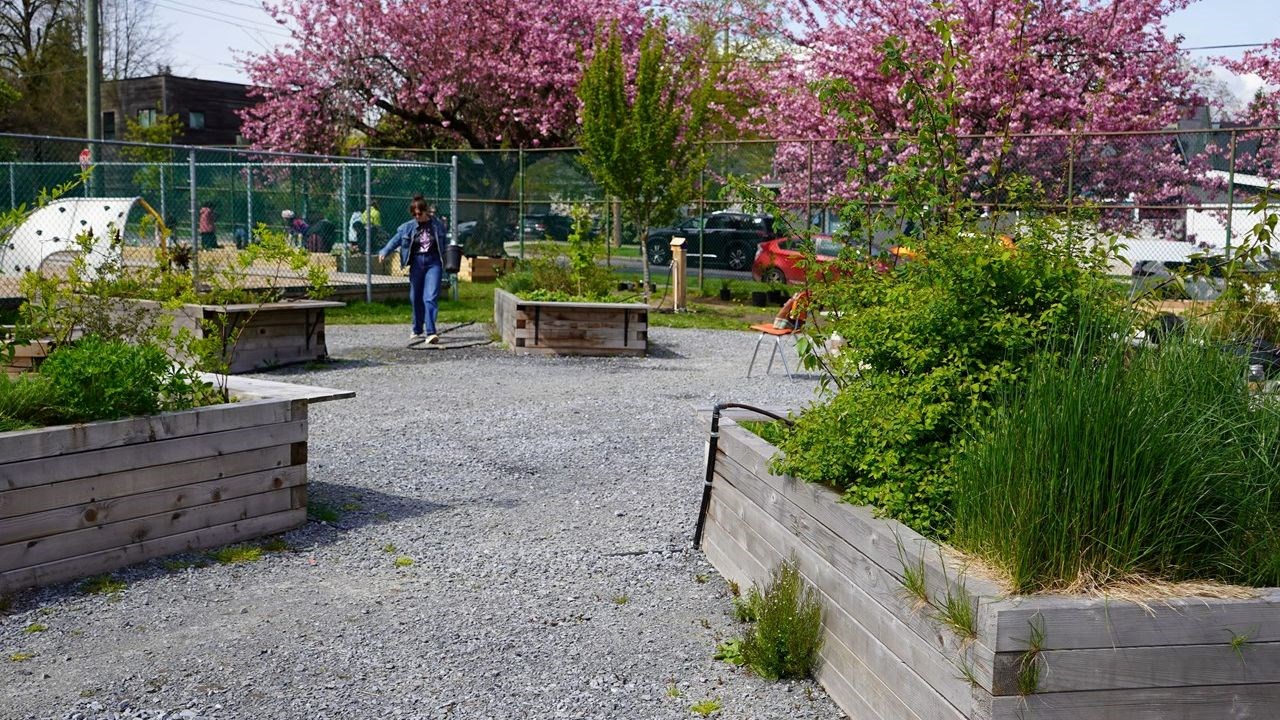
Walk into the Earth Spirit Healing Garden at the Total Education alternative program and you’ll find a thriving garden filled with living things — Indigenous medicines, herbs, vegetables, berry bushes and cedar trees.
The Earth Spirit Healing Garden was conceived and spearheaded by Malcolm Key, VSB Indigenous education enhancement worker who envisioned the space as one where students could establish a connection to the land, steps away from their classrooms.
Key, originally from an Anishanaabe tribe in Ontario, spent the last 35 years living on Coast Salish land. “Most of my work career has been centred around land-based education. Outdoor adventure-based learning for both Indigenous and non-Indigenous youth,” says Key.
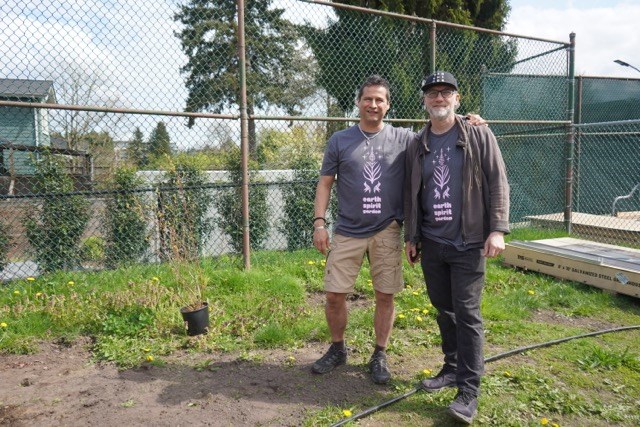 Malcolm with Irwin Oostindie, Director of Voor Labs
Years working in the field of education, he notes, showed him that while some students may not want to adventure to faraway places in nature, they all benefit from some connection to the earth.
“I believe it’s very important that youth have a good relationship to the land. We are brought into this world by one mother and are sustained by another mother; mother earth. She takes care of us in many ways – providing air, water and food to eat. We felt that was important to provide an opportunity for our youth to learn about the natural world, right in their backyard.”
The garden was funded through a grant from the Aqueduct Foundation. The garden’s signage was designed by Tsleil-Waututh artist, Ocean Hyland.
An urban sanctuary
At the entrance of the garden are two yellow cedars. Cedar represents the tree of life and is one of four Indigenous sacred medicines. Cedar boughs are also used to brush off negative energy.
“We wanted the cedars at the entrance so that when you come into this garden, you feel cleansed,” explains Key.
Near the entrance are two greenhouses. One is a dedicated sensory space for students, the other will be used as a nursery in the cooler months and a hothouse in the warmer months.
The centre of the garden is filled with traditional Indigenous medicines in eight raised planter boxes that form a medicine wheel. The inner circle formed by the medicine wheel also functions as an outdoor meeting area for talking circles or school meetings.
There are sections of the garden dedicated growing vegetables and berries.
“Students are going to be growing food to take home to their families and sharing with their community. It’s an empowering experience for them as well,” explains Key. “We’re providing superfoods to nourish the vessels students are going to go through life with.”
Hope for the future
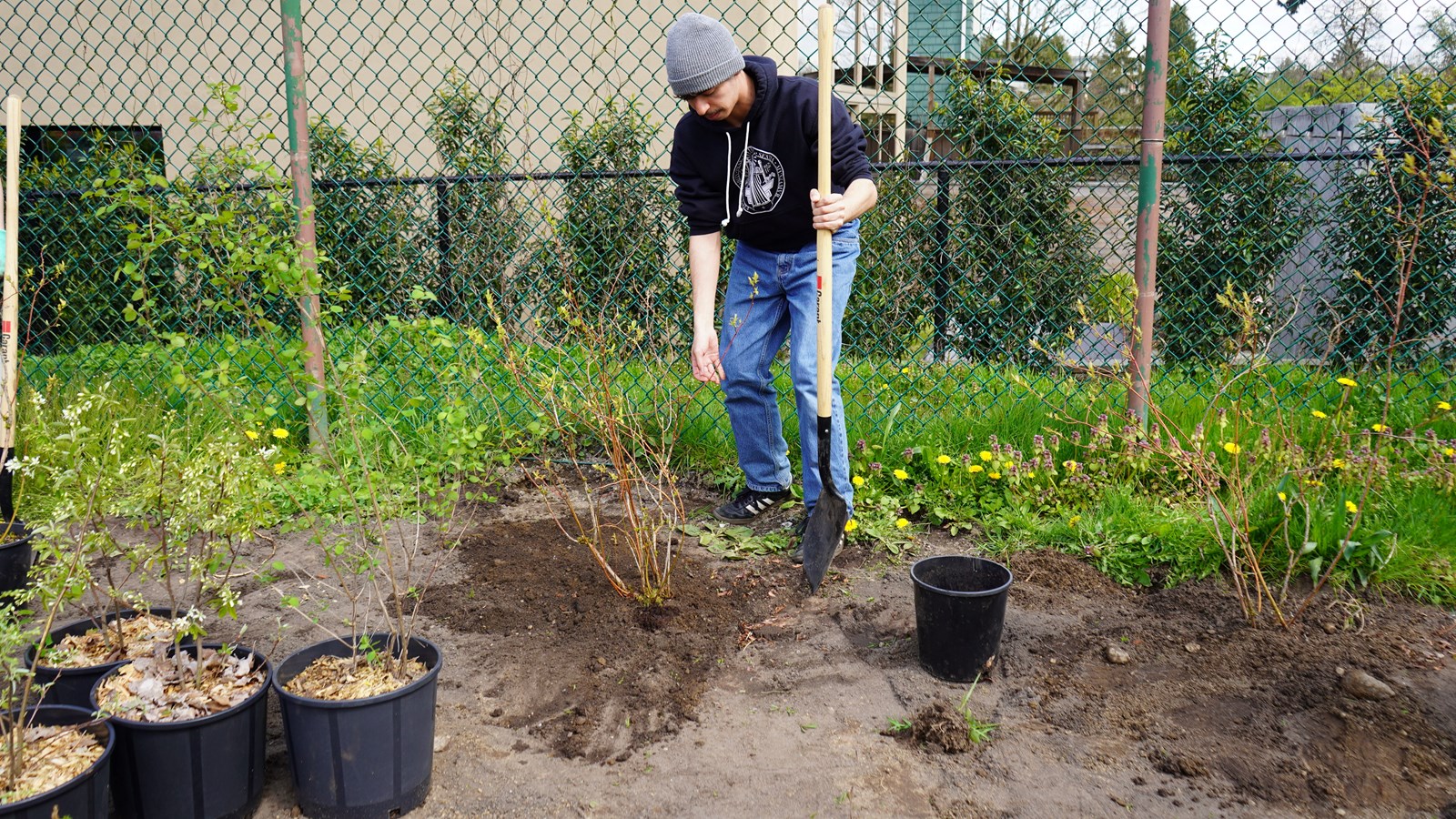
For Lucas, a grade 12 student, working on the garden has given him an appreciation for the hidden labour of growing food and awakened his wonder about what is possible when a group of people come together in pursuit of a common goal.
“Every single one of us has worked really hard to turn this garden into what it is. I think this is going to be an incredible educational opportunity not only now, but especially down the line for generations of Total Ed kids,” says Lucas.
“I’m also very, very proud to have worked on it. Being out here gives me a sense of hope, it reminds me that if we can all work together, we can achieve incredible things,” he continues.
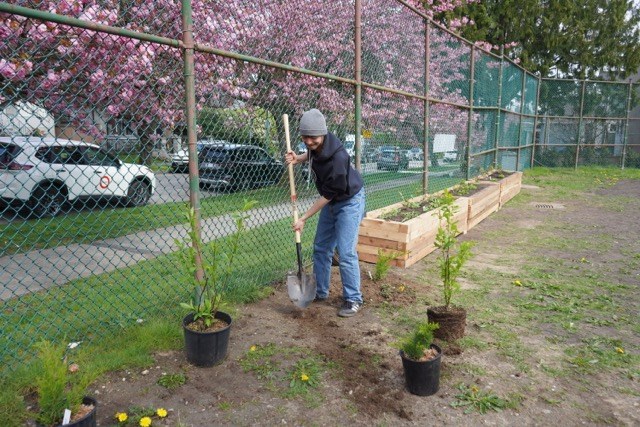 Lucas in the Earth Spirit Healing Garden
Future plans for the Earth Spirit Healing Garden include a covered outdoor longhouse with a large harvest table. Key has connected with Voor labs, an organization with connection to ethnobotanists and Coast Salish elders to transfer knowledge of Indigenous medicines and companion planting to youth. In the fall, he hopes that some students in the Total Ed program will provide tours of the garden to younger elementary-aged students.
“In an urban setting, a lot of youth don’t have those opportunities. Working outdoors, they’ll start to see the bees coming in, and the relationships and connections of the insects and birds. They’ll see how all these things are interconnected,” says Key.
The Earth Spirit Healing Garden provides promise for learning, but more than that, it serves as a respite for all urban dwellers who enter.
“Nature is the antidote for so many things,” says Key.